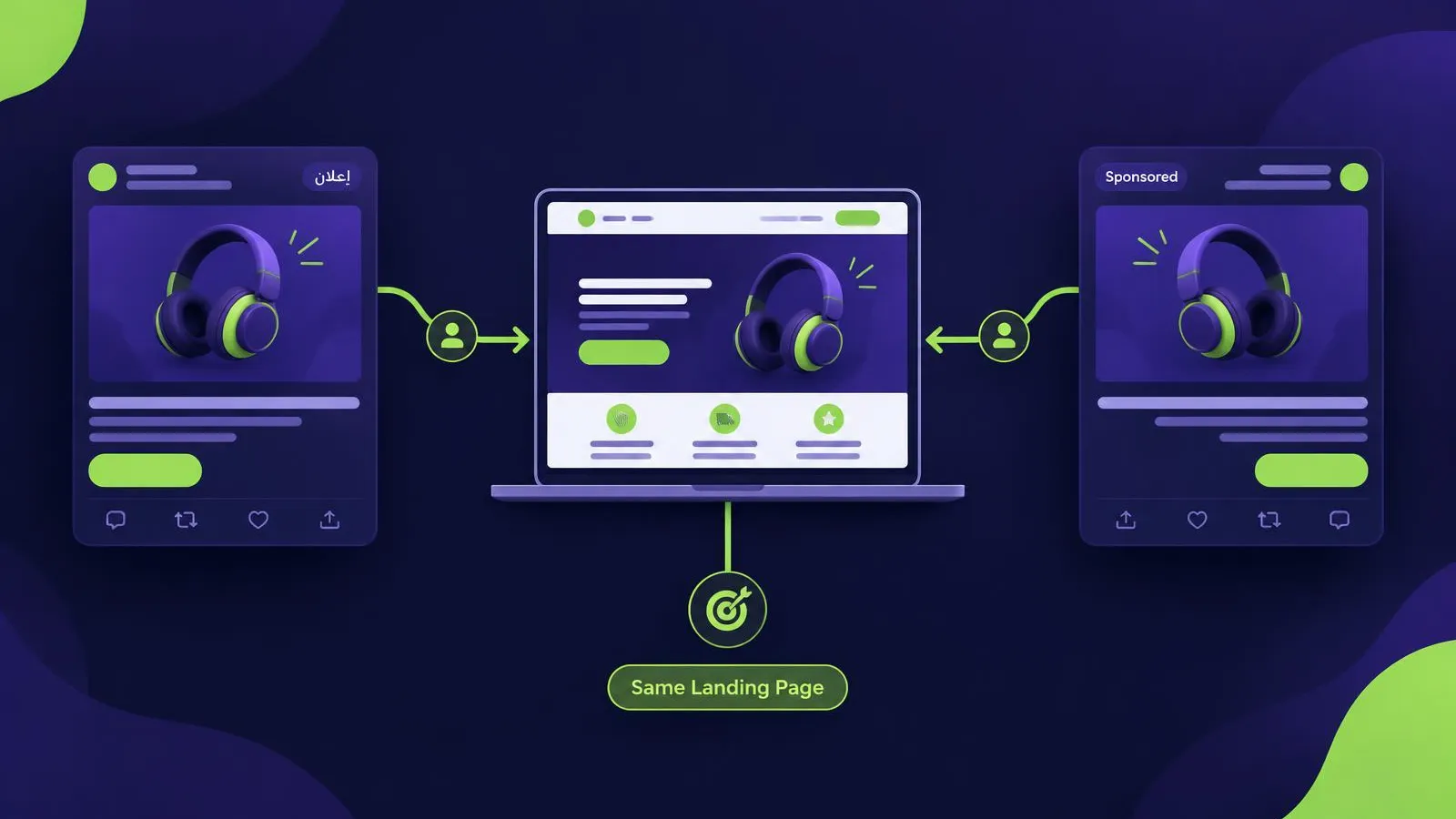
- How can Arabic and English ads preserve the same commercial promise?
- What should a paired review check from search intent to landing page and sales conversation?
Consistency is a commercial decision, not a translation task
Arabic and English ads in Saudi Arabia should make the same commercial promise even when their wording differs. A buyer who searches in English may prefer an Arabic conversation. Another may use an Arabic query containing an English product name. Neither behavior justifies assuming a buyer's role, budget, or preferred sales process from language alone.
The practical decision is which promise, evidence, and next step each journey will carry. Assign one owner to approve these elements across advertising, landing pages, forms, and sales scripts. Translators and channel specialists contribute, but somebody must resolve contradictions before launch.
Build a query-to-conversation map
Create a working sheet with one row per meaningful intent, not one row per translated keyword. Include the observed query or query theme, intended offer, advertisement language, destination language, proof, form action, and follow-up owner. Use actual search-term information where available; label untested assumptions clearly.
Review mixed-language terminology with the people who answer customer questions. A technically correct translation can still suggest a different service scope. Record approved product names and explain terms that buyers might interpret differently. For campaign organization, connect this map to your Saudi search advertising structure.
Give every promise an equivalent destination
Equivalence does not mean matching sentences. It means matching the offer's scope, eligibility, limitations, evidence, and next action. If an English advertisement offers a consultation, the Arabic page should not quietly turn that offer into a downloadable brochure. If a page promises a proposal after discovery, the confirmation message should not promise immediate pricing.
Where separate localized URLs exist, Google's guidance explains reciprocal, self-referencing language annotations for localized versions. These annotations help describe page relationships; they do not replace editorial consistency or route paid clicks to the right offer. See Google's localized versions guidance.
Use a visible language switch that preserves the equivalent service destination. Sending every switch to a generic homepage makes buyers rediscover information they already selected.
Run a paired approval checklist
Before launch, ask a bilingual reviewer and the sales owner to complete the same journey on a phone:
- Does the headline answer the intent behind the query?
- Are service boundaries, delivery conditions, and evidence equivalent?
- Does the button accurately describe the next step?
- Are form labels, validation messages, and confirmation text understandable?
- Can the team identify the requested conversation language without guessing?
- Does the assigned salesperson have the same approved offer description?
Keep screenshots and destination URLs with the approval record. A shared terminology list and named approver make later revisions easier to audit.
Complete the bilingual promise audit
Use an unfilled comparison sheet for ad promise, landing-page offer, required preparation, confirmation message and sales response. Ask the Arabic and English owners to enter the approved wording independently, then compare the underlying commitment. A translation review must include what the buyer is being invited to request, not only grammar.
Record discrepancies as specific tasks with an owner: missing scope, different eligibility, unclear next step or unsupported claim. Do not resolve them by adding promises that the delivery team cannot verify. Check that the confirmation and receiving team continue the same offer after submission.
Keep preferred conversation language distinct from the language of the page or campaign. Where a buyer can choose a language, verify that the choice reaches the responding team. Test both journeys through a real approved test submission without claiming a commercial outcome. Release only when the promise, destination and handoff have documented agreement.
Avoid false signals and recurring mistakes
Do not declare one language superior because it has a lower submission cost. Check intent mix, offer differences, routing, and sales outcomes first. Avoid literal translations of unfamiliar terminology, untranslated error messages, and page updates approved in only one language. These inconsistencies create operational noise that advertising reports cannot explain alone.
Use the bilingual SEO architecture guide when the issue extends beyond campaign pages. For a joined review of ad promises, destinations, and handoffs, contact Kitely with paired examples and the objections your sales team actually hears.